

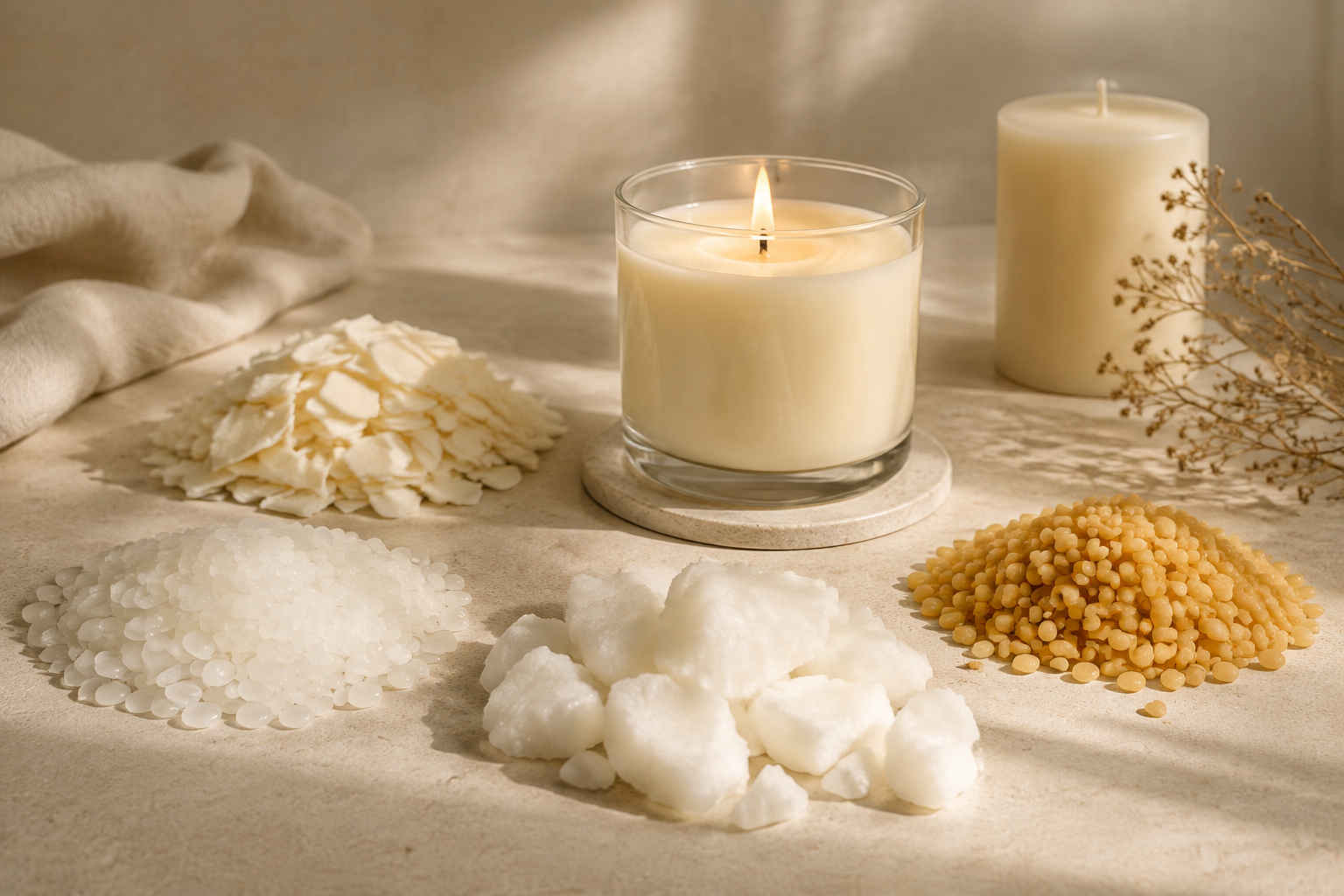
Walk through any candle aisle, and the same wax names appear on package after package: soy, paraffin, coconut, and beeswax. For shoppers, the choice can feel like a chemistry lesson. For retailers, product developers, and private-label brands, wax affects more than the label. It influences how a candle burns, how much scent is released, how smoothly the surface sets, how well the wax stays attached to the container, how much the formulation costs, and whether the product is practical to produce in volume.
The honest answer is that there is no universal best candle wax. A wax that works beautifully in a small glass jar may fail as a freestanding pillar. A wax that carries one fragrance well may perform differently with another. The right choice depends on the finished candle format, the scent target, the brand story, and the budget.
For product developers and private-label brands, wax is usually one of the first material decisions in scented candle production. Once a wax system is selected, the wick, fragrance load, curing time, container, and packaging need to be tested with that system before production. Changing the wax later usually means revisiting most of those decisions.
Why “Best” Is Not a Helpful First Question
It is tempting to choose a wax based on reputation and then force the fragrance, wick, and container to work around it. A more practical method starts with the finished candle. What format will it be? What scent experience do you want? What visual finish should the top have? What price can the formulation support?
Wax is not an inert filler. It influences how quickly the candle melts across the top, whether the melt pool reaches the container edge, how well the wax holds its shape, how much fragrance oil it can absorb without sweating, how smoothly the surface sets, and how the fragrance is released while the candle burns.
These are also reasons “best” is not a useful ranking. A wax that gives a beautiful finish in one container may not have enough structure for a pillar. A paraffin candle may be less appealing to a customer seeking a plant-based ingredient, but it can still be a well-made and strongly scented product. The material only becomes good or bad when it is combined with the right—or wrong—components.
Soy, Paraffin, Coconut, and Beeswax: The Main Differences
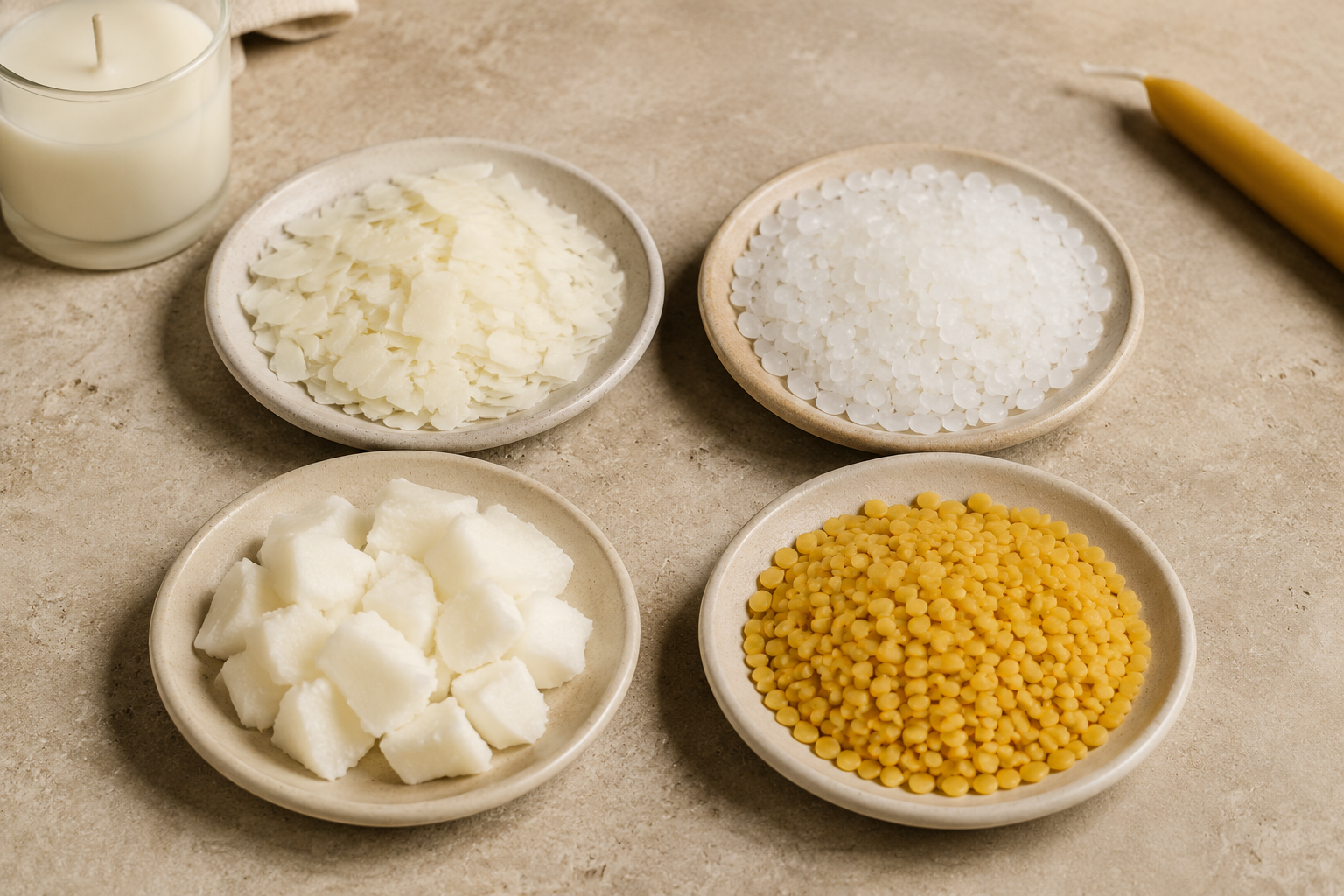
Candle waxes are sold in many grades, melt points, and blend formulas. The names below are starting points, not precise specifications.
Soy Wax
Soy wax is made by hydrogenating soybean oil. It has become a common choice for container candles and wax melts because it is plant-derived and relatively easy to market. Soy wax is softer than many structural waxes, so pure soy formulas may contain additives or be blended with other plant waxes to improve adhesion, texture, and fragrance release. A well-formulated soy candle can have a smooth appearance and a consistent scent, but soy is not automatically superior to other waxes.
Paraffin Wax
Paraffin is a traditional candle wax refined from petroleum. It remains popular because it offers predictable structure, easy coloring, and strong fragrance release. It is widely used in pillars, votives, tealights, and candle blends. Some buyers choose to avoid petroleum-derived ingredients, while others assume paraffin is lower in quality. Those perceptions oversimplify a material choice. Paraffin can be used to make well-performing candles, but if a plant-based label claim is central to your brand, paraffin will not deliver that positioning.
Coconut Wax
Coconut wax is made from hydrogenated coconut oil. It is valued for its creamy texture, smooth burning properties, and compatibility with fragrance oils, which makes it popular in premium container candles and wax melts. Pure coconut wax is generally too soft for many candle formats, so most coconut waxes are blends with soy, rapeseed, or another vegetable wax. A product labelled “coconut wax” may contain a coconut blend. That is not automatically misleading; it is a practical reason to ask for the full formula.
Beeswax
Beeswax is a dense natural wax produced by honeybees. It has a mild honey aroma and enough firmness to hold its own shape, so it is often used in pillars, votives, and molded candles. It is expensive, not vegan, and its honey scent can compete with added fragrance. Beeswax is more common in unscented natural candles or as a hardening ingredient in blends than as the base for a strongly scented container candle.
| Wax | Common Formats | Strengths | Limitations |
|---|---|---|---|
| Soy wax | Container candles, wax melts, blends | Plant-derived, smooth surface and accessible positioning when the formula is matched to the container | Soft, can sweat or pull away from the container, often needs additives or blending |
| Paraffin wax | Pillars, votives, tealights, container blends | Predictable structure, easy to color, good scent release | Petroleum-derived and less suitable for a plant-based brand story |
| Coconut wax | Premium container candles, wax melts, blends | Creamy texture, smooth burn, good compatibility with fragrance oils | Too soft to use alone in many formats, usually blended, higher cost |
| Beeswax | Pillars, votives, freestanding candles | Natural honey scent, firm structure, distinctive natural story | High cost, not vegan, can compete with added fragrance |
The table is an orientation, not a specification. Each wax can be supplied in different grades and blend ratios. The technical data sheet and burn-test results for the exact formula will tell you more than the label.
How Wax Affects Hot and Cold Throw
Cold throw is the scent of an unlit candle. Hot throw is the scent the candle releases under heat. A candle can smell strong in the package but faint when lit, or subtle in the package and powerful in a room. Both responses are controlled by the whole wax–fragrance–wick system.
Wax holds the fragrance oil and releases it as the candle melts and liquid wax moves toward the wick. Different wax hardness and melt behavior affect that release. A softer wax may form a melt pool quickly, but it may also limit the amount of fragrance it can carry. A harder wax may produce a stable shape and burn, but it may need a larger wick or a different fragrance chemistry to release scent effectively.
More fragrance oil does not automatically mean a stronger candle. Each wax system has a practical capacity. If that level is exceeded, the wax can sweat, develop an uneven surface, or burn with a weak flame. Professional development tests different fragrance loads and wick sizes instead of assuming that more oil equals more scent.
What “Natural” and “Clean” Labels Do Not Tell You
Shoppers and brand owners often prefer soy because it is plant-based, coconut because it sounds premium, or beeswax because it is natural. These instincts are understandable, but they do not replace an environmental assessment. Soy production has agricultural impacts, coconut wax is often blended, beeswax is animal-derived, and paraffin candles can be manufactured well.
The words “clean,” “green,” and “natural” are marketing language, not evidence. If a claim matters on your final label, ask for specifics: where the wax is sourced, exactly which waxes are in the blend, and whether any third-party certification applies to the raw material, packaging, or finished product. Requirements for product claims vary by market, so have finished label claims reviewed by the appropriate compliance adviser.
Match the Wax to the Candle Format
A candle is a small thermal system. Wax behavior is not just a property of the material; it depends on whether the candle is enclosed, freestanding, or flameless.
Container Candles
In container candles, the glass or tin holds the melted wax, so the wax does not need to support its own shape. This is why softer waxes such as soy and coconut blends are common. The formula still needs to adhere to the container, set with a clean top, and create a full melt pool with the chosen wick. These variables must be tested together because a wax can look right at pouring yet pull away from glass or tunnel during the first burn.
Pillars and Votives
Freestanding candles need enough structure to remain upright while the wax melts. Higher-melt-point waxes such as paraffin, beeswax, and stiffer blends are common choices. If the same soft container wax is used in a pillar, it may melt too quickly or collapse before the candle is finished.
Wax Melts
Wax melts do not depend on a wick or a structural burn profile. The priority changes to fragrance release and behavior in a melt warmer. Softer wax blends can work well here, but the formula still needs to release scent consistently over multiple warming sessions and avoid leaving an unpleasant residue in the warmer dish. Fragrance capacity and melting temperature should be checked with the warmer style the customer is expected to use.
Why Blends Are Common in Commercial Candles
Most pure waxes have practical limitations. Pure soy can be soft, pure coconut can be too soft for many formats, pure paraffin may not fit a natural story, and pure beeswax is costly and can dominate a fragrance. Blends solve those problems by combining the strengths of different materials.
A soy–coconut blend can combine the creamy texture and fragrance compatibility of coconut with the structure and lower cost of soy. A soy–paraffin blend can bring plant-based content while adding structure and reliable hot throw. Beeswax can stiffen a blend and contribute a faint honey note. These combinations also matter for labels: a candle described as soy may be a soy-dominant blend rather than 100% soy. Label definitions can vary by market, and the supplier’s full formula is the only way to know exactly what is in the product.
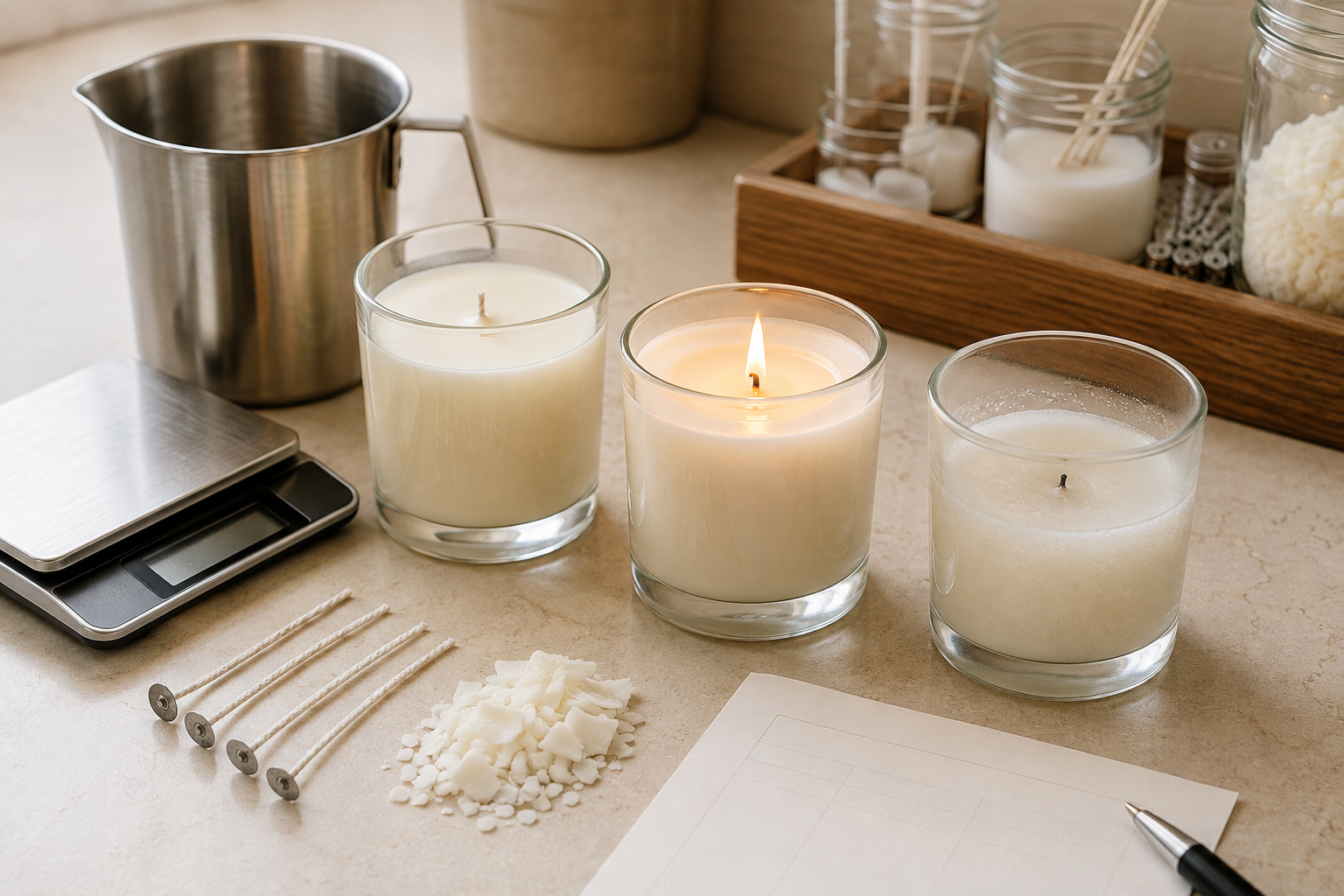
How to Compare Wax Choices for a New Candle Range
Define the finished candle before fixating on the wax name. The comparison should include:
- Format. Container, pillar, votive, tealight, or wax melt? The format sets the structural baseline.
- Scent objectives. Does the brand need immediate hot throw, a long-lasting scent, or a subtle natural finish? Fragrance family, fragrance load, and wax chemistry all play a role.
- Visual standard. Does the product allow natural frosting and minor surface variation, or is a consistent, smooth top required?
- Positioning and label claims. Plant-based, natural, vegan, or unscented? The claim must match the actual formula.
- Cost and supply. Is the wax available in consistent volume at the target cost? What happens if the supplier changes its blend?
- Test evidence. What burn samples, technical data sheets, and compatibility tests support the recommendation?
For production buyers, the deciding evidence is a prototype made with the actual container, fragrance, coloring, wick, and wax system. A wax that performs well in one lab setup can behave differently when these elements change.
Frequently Asked Questions About Candle Wax
Is a candle labelled “soy wax” always 100% soy?
Not necessarily. The label may describe a soy-dominant blend or a container wax with additives. If exact composition matters, ask the brand or factory for the full wax system rather than relying on the front label.
Why is coconut wax usually blended with other waxes?
Pure coconut wax is often too soft to use in standard candle formats. Manufacturers blend it with soy, rapeseed, or other vegetable waxes to create a more usable formula while keeping the creamy texture and good fragrance compatibility.
Does wax choice affect wick selection?
Yes in practice. Wax density, melting point, and oil content affect how much heat the flame needs and how fragrance moves through the candle. A wick that works in one wax may be undersized or oversized in another. Wick tests should be done with the final formula.
Is paraffin still used in premium candles?
Yes. Paraffin is a useful material for structure, color, and scent release. Premium positioning depends on the total formulation and finished performance, not only the wax category.
Choosing a Wax That Works for Your Candle Project
For retailers, wholesalers, and private-label brands, the practical question is not “which wax is best?” It is whether the wax system can meet your production, scent, visual, and budget requirements. Contact YouRan Crafts to discuss product specifications, samples, packaging options, OEM/ODM or private-label customization, and quotations for your next candle range.